Interview
Teamwork Interview Questions: Evaluating Collaboration, Communication, and Adaptability
Dec 16, 2025

Introduction
Teamwork skills have become a decisive factor for successful hiring across industries in 2025. As global teams expand, remote collaboration becomes standard, and cross-functional work intensifies, organizations need employees who can work together effectively—regardless of distance, culture, or communication style. Because of this, teamwork interview questions have become central to modern recruitment frameworks.
These questions help uncover how candidates interact with others, resolve disagreements, share responsibilities, and support team objectives. They reveal subtle yet critical qualities: empathy, active listening, emotional intelligence, openness to feedback, and the ability to operate in high-pressure group environments.
With advanced assessment tools like Tener.AI, organizations can also analyze English clarity, tone, and coherence during teamwork-related answers, enhancing the accuracy of soft-skill evaluation. For HR teams in 2025, assessing teamwork is not just about identifying cooperative personalities—it’s about understanding how people think, collaborate, and influence shared outcomes.
What Are Teamwork Interview Questions?
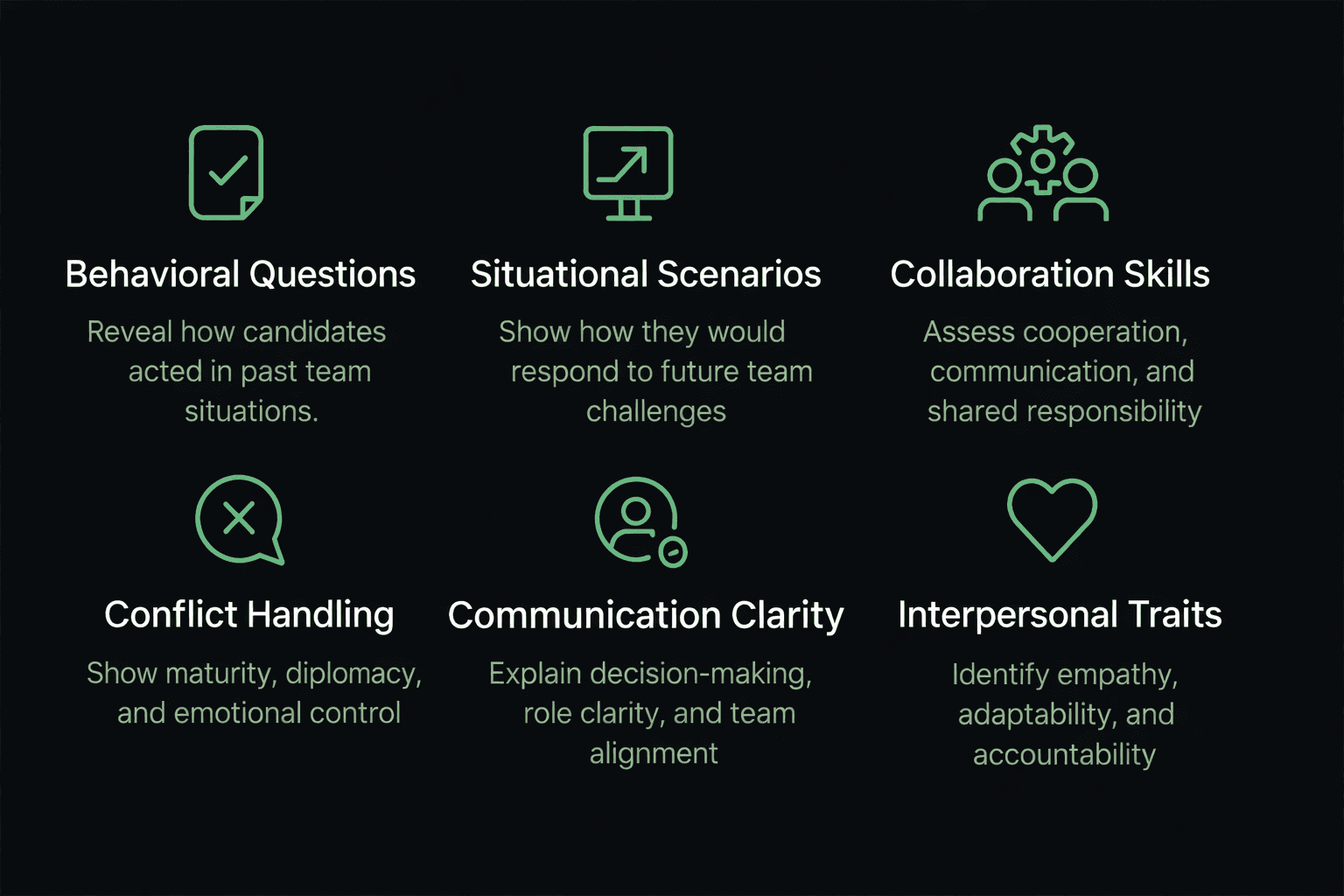
Teamwork interview questions are a category of behavioral and situational questions designed to evaluate how candidates interact, collaborate, and communicate within a group environment. Unlike technical questions, which focus on individual capabilities, teamwork-centered questions explore how a person operates when responsibilities, decisions, and outcomes are shared with others. These questions uncover the interpersonal dimension of work—how candidates approach cooperation, handle disagreement, support colleagues, and contribute to joint success.
According to Indeed, teamwork interview questions help identify patterns in a candidate’s past behavior, which often predict how they will perform in future collaborations. These questions typically ask candidates to describe real-life scenarios—times when they worked closely with teammates, solved a collective challenge, or navigated a conflict that required diplomacy and emotional maturity.
The strength of these questions lies in their open-ended nature. They encourage candidates to go beyond rehearsed statements and reveal not only what they did but why they did it, how they communicated, and how their actions affected team dynamics. A well-constructed teamwork question uncovers subtle qualities: empathy, adaptability, accountability, and the ability to balance personal initiative with collective responsibility.
Moreover, teamwork interview questions provide insight into communication habits. Candidates must explain their thought processes, clarify their role in group efforts, and articulate how decisions were made. This reveals whether they communicate with clarity, confidence, and respect—traits that are especially important in hybrid and global teams. With AI-driven tools like Tener.AI, recruiters can analyze the clarity and coherence of these answers in English, making teamwork evaluation more accurate for multinational organizations.
In essence, teamwork interview questions help recruiters assess not just what candidates achieved, but how they contributed to relationships, alignment, and shared outcomes within a team. They shift the focus from task execution to interpersonal effectiveness, offering a more holistic view of candidate potential.
Why Teamwork Interview Questions Matter
Teamwork interview questions matter because collaboration has become a foundational requirement for nearly every modern role. Regardless of industry, seniority, or specialization, employees are expected to navigate group dynamics, coordinate with others, and contribute to collective goals. As workplaces become more interconnected, teamwork is no longer a soft skill but a core competency that directly influences productivity, innovation, and organizational culture.
Several structural shifts explain why evaluating teamwork is crucial:
Collaboration Is Built Into Organizational DNA
Most companies today rely on cross-functional teams. Marketing works with engineering, design collaborates with product management, and operations interacts with sales. The ability to contribute meaningfully in these interconnected workflows determines whether projects succeed or collapse under misalignment.
Remote and Hybrid Work Models Increased Dependency on Communication
As LinkedIn Talent Solutions highlights, communication and teamwork rank among the most sought-after competencies in global hiring. In distributed teams, employees rely on clear messaging, asynchronous collaboration, and proactive alignment. Teamwork interview questions help recruiters understand whether a candidate can function effectively in environments where misunderstandings are easy and clarity is essential.
Teamwork Predicts Cultural Fit and Long-Term Stability
A candidate may have exceptional technical skills but struggle to integrate into a collaborative environment. Teamwork-focused questions reveal attitudes toward accountability, openness to feedback, willingness to compromise, and resilience during disagreements—all of which influence long-term team health.
Effective Teamwork Drives Performance and Innovation
According to Harvard Business Review, high-performing teams are not just collections of skilled individuals—they are groups that share trust, psychological safety, and structured communication. Teamwork questions uncover whether candidates support these conditions or undermine them.
Teamwork Evaluation Helps Prevent Hiring Risks
Candidates who avoid conflict, dominate conversations, or fail to share responsibility can create tension that slows down projects. By analyzing real examples of collaborative behavior, interviewers can detect red flags early.
Lastly, teamwork interview questions reveal how candidates think, not just what they do. They provide insight into problem-solving, emotional regulation, and communication under pressure. When paired with AI-driven clarity analysis through platforms like Tener.AI, employers gain a multidimensional understanding of how candidates will operate within real teams.
In short, teamwork interview questions are essential because they illuminate the behaviors that shape team cohesion, workplace relationships, and the ability to deliver results through collective effort.
Reason Teamwork Questions Matter | What Recruiters Learn | Impact on Team Performance | Value for Hiring Decisions |
Understanding real collaboration behavior | Reveals how candidates share tasks, communicate, and resolve issues. | Strengthens alignment and reduces friction within teams. | Improves prediction of candidate success in team settings. |
Assessing communication clarity | Shows how well candidates articulate ideas during teamwork scenarios. | Enhances trust and coordination in daily work. | Helps identify communication gaps early. |
Evaluating adaptability under pressure | Demonstrates how candidates react when plans shift or conflicts arise. | Ensures stability and resilience within fast-moving teams. | Reduces hiring risks by highlighting behavioral reliability. |
Determining cultural and interpersonal fit | Shows if the candidate aligns with the company’s teamwork philosophy. | Improves cohesion and reduces turnover caused by poor fit. | Supports long-term hiring decisions. |
Enhancing evaluation with AI insights | Tools like Tener.AI analyze clarity, tone, and structure. | Strengthens collaboration in multilingual and hybrid teams. | Provides a more objective and data-backed assessment. |
Core Benefits of Using Teamwork Interview Questions
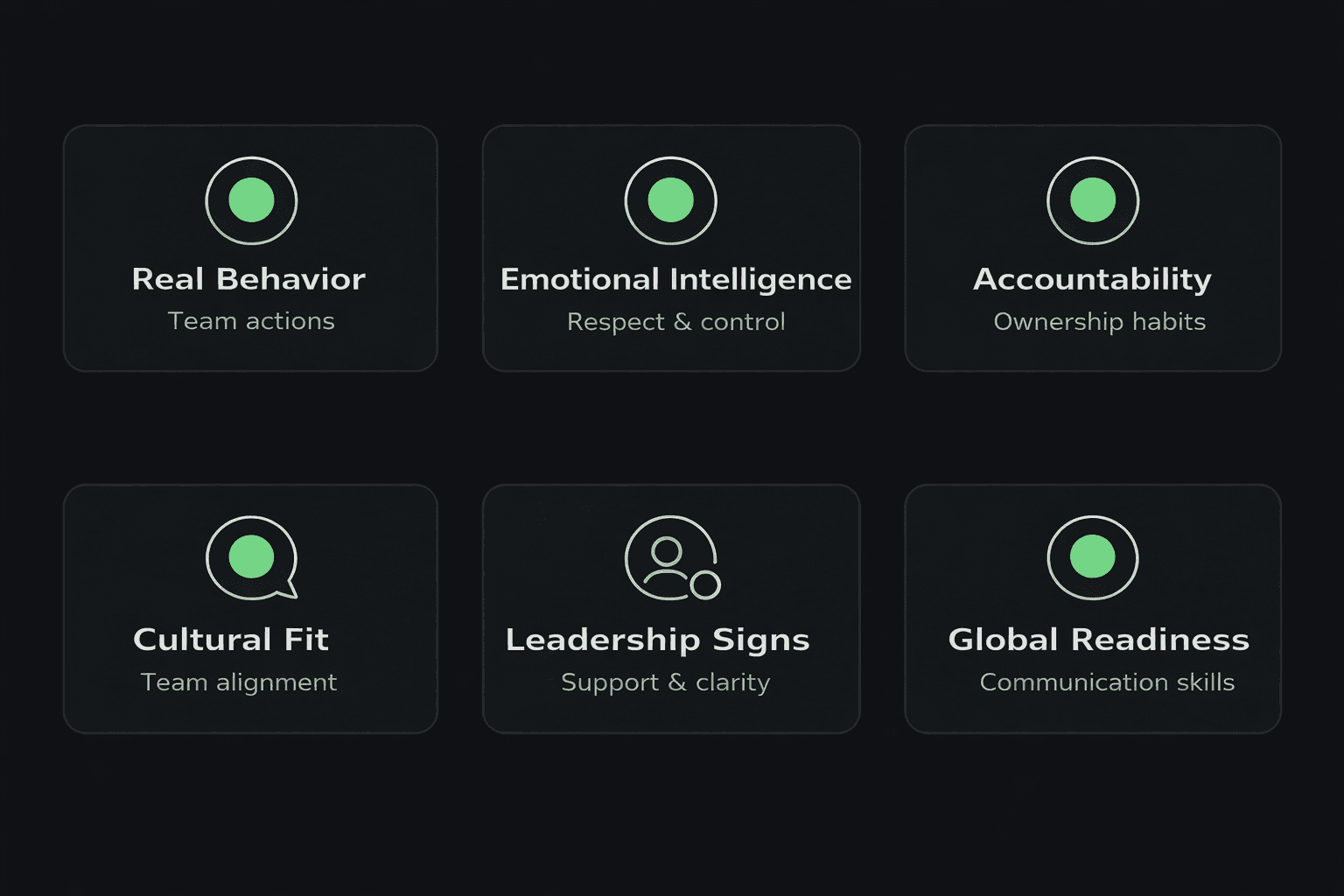
Teamwork interview questions reveal layers of professional behavior that traditional interviews almost never uncover. While technical assessments measure what a candidate can do independently, teamwork questions explain how they behave when their success depends on cooperation, communication, and shared responsibility. These answers provide a deeper understanding of the candidate’s interpersonal instincts, decision-making patterns, and overall compatibility with team dynamics.
One of the most significant advantages of these questions is the insight they provide into a candidate’s emotional intelligence. Responses often reveal whether a person recognizes the importance of listening, respecting other perspectives, and managing their reactions in moments of tension. These qualities strongly influence morale and group cohesion, especially in environments where teams frequently encounter unexpected changes or conflicting priorities.
Teamwork interview questions also help identify how candidates handle accountability. Recruiters pay close attention to the language candidates use when describing past experiences—whether they acknowledge their part in a challenge, whether they credit teammates for shared achievements, and whether they demonstrate a constructive attitude toward feedback. This helps distinguish candidates who consistently take ownership from those who deflect responsibility.
Another important benefit is the ability to assess cultural alignment. Every company has its own approach to collaboration—some emphasize structured communication, while others value flexibility and creative freedom. As Harvard Business Review notes, team culture shapes the success of nearly all group-based work. Behavioral teamwork questions reveal whether candidates naturally adapt to the expectations of the organization or whether their style could create friction.
In addition, these questions uncover leadership potential long before candidates are placed in a supervisory role. Individuals who contribute to group stability—by de-escalating conflict, helping clarify goals, or supporting teammates—often evolve into strong future leaders. Recruiters can observe these traits even in entry-level or mid-level candidates by analyzing the interpersonal strategies they describe in teamwork scenarios.
Finally, teamwork questions help companies anticipate how well candidates will operate in hybrid or global teams. Clear communication, structured reasoning, and adaptability are essential in distributed environments where many interactions occur online. Tools like Tener.AI can analyze how effectively and clearly candidates describe their experiences in English, giving employers an additional dimension of evaluation for international collaboration.
Real-World Examples Across Industries
Teamwork skills manifest differently across industries, yet the underlying principles of communication, coordination, and shared accountability remain universal. In technology, collaboration drives innovation, especially when engineers, designers, and product managers depend on each other’s expertise. A software feature cannot move forward unless each member contributes insights, negotiates priorities, and aligns on user expectations. When candidates answer teamwork interview questions in this field, recruiters often listen for their ability to bridge technical and non-technical perspectives, a skill that determines whether cross-functional projects move smoothly or stall due to misunderstanding.
In healthcare, teamwork takes a more immediate and high-stakes form. Nurses, physicians, administrative staff, and specialists collaborate to ensure patient safety. Communication failures in this environment can lead to errors, so interviewers look for behaviors that demonstrate calmness under pressure, structured information sharing, and respect for protocols. Research from Harvard Business Review has consistently emphasized that medical outcomes improve when team members coordinate effectively, especially in emergency scenarios. Here, teamwork is not just beneficial—it is life-critical.
Customer service and hospitality rely heavily on interpersonal collaboration as well. Front-desk staff, service representatives, and support teams must cooperate to resolve customer concerns, especially when the issue spans multiple departments. When candidates describe teamwork experiences for these roles, recruiters look for their ability to maintain empathy, escalate issues responsibly, and support colleagues facing difficult interactions. A strong team player in customer-facing environments balances emotional intelligence with problem-solving, ensuring that pressure is shared rather than pushed onto individual employees.
In education, collaboration appears in curriculum planning, student support, and administrative coordination. Teachers may work together to adapt materials for diverse student needs, while student counselors and academic coordinators exchange insights to create a consistent support system. Candidates must demonstrate that they can communicate transparently with peers, collaborate on long-term initiatives, and navigate disagreements about teaching strategies. Institutions influenced by frameworks from OECD often prioritize teamwork as a core competency because it correlates with stronger educational outcomes.
In manufacturing and logistics, teamwork is operational and highly structured. Machine operators, quality controllers, and supply chain coordinators must synchronize their roles with precision. A delay or miscommunication at one stage affects the entire workflow. Recruiters therefore examine whether candidates understand the importance of accountability, shift-to-shift communication, and adherence to procedures. Describing real teamwork examples from this sector reveals whether candidates can operate reliably in environments where timing, safety, and clarity determine overall productivity.
Fully remote and hybrid teams—now common across many industries—introduce another dimension of teamwork. Employees depend on asynchronous collaboration, digital tools, and written communication more than ever before. Teamwork interview answers for remote roles often emphasize self-organization, proactive updates, documentation habits, and respect for the varying communication styles found in distributed teams. Insights from LinkedIn Talent Solutions show that remote-team collaboration skills have become one of the strongest predictors of hiring success. Tools such as Tener.AI help recruiters evaluate whether candidates can express ideas clearly in English, maintain professionalism in virtual teamwork settings, and adapt to digital communication norms.
Across all these industries, teamwork interview questions reveal how candidates behave in environments where outcomes depend on group effort. They help employers detect qualities that directly influence operational stability, culture, customer satisfaction, and long-term growth. While the context may differ, the underlying behaviors—clarity, empathy, responsibility, and adaptability—remain essential markers of effective teamwork.
Industry | Teamwork Expectations | Key Recruiter Insight | Impact on Performance |
Technology | Cross-functional collaboration between technical and non-technical teams. | Evaluates ability to translate ideas and align diverse perspectives. | Improves product delivery and innovation flow. |
Healthcare | Coordinated, high-clarity communication under pressure. | Reveals emotional control and adherence to structured protocols. | Directly influences patient safety and care quality. |
Customer Service & Hospitality | Collective handling of client needs and internal escalations. | Shows emotional intelligence and responsibility sharing. | Enhances customer satisfaction and loyalty. |
Education | Collaborative curriculum planning and student support. | Highlights clarity, empathy, and academic coordination skills. | Strengthens program consistency and learning outcomes. |
Manufacturing & Logistics | Precise coordination across sequential operational steps. | Examines accountability, reliability, and procedural discipline. | Reduces delays, errors, and operational risk. |
Remote & Hybrid Teams | Asynchronous communication, proactive updates, digital collaboration. | Shows adaptability to distributed workflows and written clarity. | Supports productivity and cohesion in virtual environments. |
Types of Teamwork Interview Questions
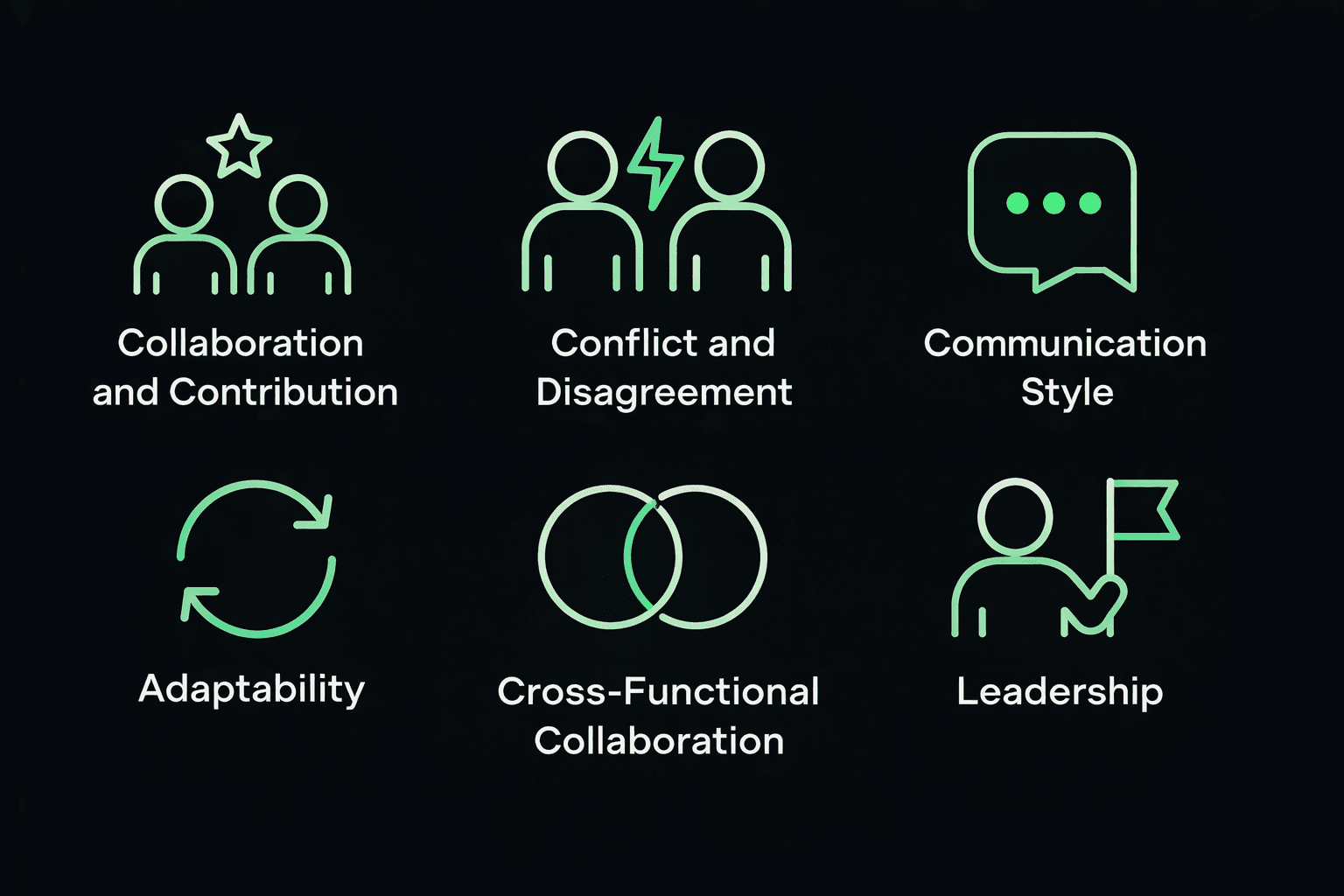
Teamwork interview questions span several categories, each designed to highlight a different aspect of collaborative behavior. Although many of these questions appear simple on the surface, they reveal complex insights into how candidates think, communicate, and contribute within group environments. Employers use these categories to form a balanced understanding of a candidate’s teamwork style based on real-life experiences rather than hypothetical assumptions.
One of the most common types focuses on collaboration and contribution. These questions explore how candidates participate in group efforts, support teammates, and share responsibilities. When candidates describe moments of collaboration, recruiters listen for examples that show initiative paired with humility, a willingness to help others without overshadowing them, and an understanding of how personal actions affect the broader team outcome. As LinkedIn Talent Solutions notes, contribution consistency is one of the strongest indicators of long-term team performance.
Another category examines conflict and disagreement. Conflict in teams is inevitable, and it often generates growth when managed well. Candidates are asked to describe situations where opinions clashed, decisions were difficult, or personalities conflicted. Their answers reveal whether they handle tension with professionalism, whether they can compromise without losing clarity, and whether they can maintain relationships even when conversations become uncomfortable. Recruiters look for behaviors that show maturity—such as recognizing different perspectives, staying calm, and seeking solutions rather than victory.
A third type focuses on communication style. These questions explore how candidates explain their ideas, share progress updates, or give and receive feedback. Communication affects nearly every aspect of teamwork, and answers in this category uncover whether the candidate communicates transparently, listens actively, and adapts their style depending on the situation. Research from SHRM highlights that communication misalignment is one of the most common causes of team breakdowns. Thus, recruiters often listen for indicators such as structure, clarity, empathy, and the ability to simplify complex information for different audiences.
Another category emphasizes adaptability in group environments. These questions help recruiters understand whether candidates can adjust their approach when team priorities shift. Candidates may describe moments when deadlines changed, responsibilities were redistributed, or the team had to quickly shift strategies. The way they navigated these shifts indicates their resilience and flexibility—qualities increasingly important in dynamic or fast-paced industries.
There is also a category focused on cross-functional collaboration, which explores how candidates work with teams outside their immediate specialty. For example, a software developer might need to collaborate with designers, marketers, or product managers. These scenarios help recruiters understand whether the candidate can cooperate with people who have different expertise, communication styles, and expectations. Companies influenced by research from McKinsey & Company often prioritize this competency because cross-functional alignment strongly correlates with project success.
Finally, some teamwork questions target leadership within teams, even for candidates who are not applying for managerial roles. These questions uncover whether a candidate can motivate others, mediate disagreements, encourage contribution, or help the group stay focused. Leadership in teamwork does not always mean taking charge; sometimes it means stepping back, empowering others, and supporting the collective direction. The experiences candidates share reveal whether they naturally exhibit leadership behaviors that strengthen team dynamics.
Together, these categories create a complete picture of a candidate’s teamwork abilities. They allow interviewers to evaluate communication, empathy, resilience, accountability, and interpersonal intelligence—all of which shape the success of teams across industries. When paired with AI-driven clarity analysis using platforms like Tener.AI, these questions provide one of the most reliable foundations for understanding a candidate’s collaborative potential.
How to Analyze Teamwork Answers Effectively
Analyzing teamwork-related answers requires more than simply listening for positive outcomes or impressive project descriptions. True evaluation depends on identifying how a candidate thinks, communicates, and behaves in real collaborative environments. Effective teamwork analysis focuses on the underlying logic of the candidate’s actions, the interpersonal signals embedded in their narrative, and the level of ownership they demonstrate when reflecting on group experiences.
A strong teamwork answer typically shows clarity of thought. Candidates who communicate well tend to describe events with a natural structure, explaining the situation, the group context, the actions they personally took, and the impact those actions had on the team. Recruiters pay close attention to how candidates differentiate their role from the group’s role, because this distinction reveals whether the individual sees themselves as an active contributor or merely as an observer carried by the team’s momentum. This clarity also helps interviewers identify communication habits—whether the candidate speaks concisely, overexplains, or struggles to articulate cause-and-effect relationships.
Emotional intelligence is another core element to evaluate. Candidates often reveal their emotional response to challenges, disagreements, or shifts in responsibility. When interpreting these answers, recruiters listen for indications of empathy, patience, and composure. For example, a candidate who describes a difficult teammate in overly negative terms may lack the emotional maturity needed for harmonious collaboration. In contrast, someone who acknowledges differing perspectives and focuses on resolution rather than blame demonstrates a higher level of interpersonal awareness.
Behavioral consistency also plays an important role. Recruiters examine whether candidates take responsibility for their actions, whether they acknowledge their mistakes, and whether they can reflect critically on how group dynamics influenced outcomes. Research from SHRM emphasizes that reflective thinking and accountability are among the strongest indicators of team effectiveness. Candidates who avoid specifics, speak in abstractions, or shift blame may struggle in real collaborative environments.
Another important component of analysis is evaluating adaptability. Teamwork environments rarely remain static; project priorities change, teammates come and go, and unexpected obstacles arise. Interviewers listen for how candidates reacted when circumstances shifted and whether they remained flexible, communicative, and reliable under pressure. Adaptability in teamwork often reveals a candidate’s long-term potential, especially in roles that require cross-functional collaboration.
Finally, communication quality must be assessed carefully, especially for multilingual or hybrid teams. Recruiters consider not only what candidates say but how they say it—whether their explanations are coherent, whether their tone is constructive, and whether their reasoning is easy to follow. AI-supported tools such as Tener.AI help organizations evaluate the clarity and structure of candidates’ English communication, making teamwork analysis more consistent and objective in global hiring environments.
Trends and Innovations in Teamwork Skill Evaluation
The evaluation of teamwork skills has evolved significantly as workplaces have become more distributed, more cross-functional, and more dependent on digital communication. Traditional behavioral interviews remain a core part of the assessment process, but modern recruiting increasingly incorporates advanced technologies, specialized frameworks, and data-driven methodologies. These innovations enable recruiters to observe how candidates collaborate, communicate, and adapt—not only through conversation but through realistic simulation and analytical insights.
AI-assisted interviewing has become one of the most influential developments in teamwork assessment. Many platforms now use natural language processing to analyze candidates’ speech patterns, tone, clarity, and reasoning. This approach helps interviewers detect subtle indicators of collaboration potential, such as the ability to structure ideas logically or maintain steady communication under cognitive load. Publications like Forbes note that AI-enhanced interviewing improves consistency by reducing human bias and enabling deeper insight into behavioral nuances.
Another major trend involves scenario-based evaluations. Companies design practical simulations that mimic real teamwork challenges—coordinating tasks, resolving disagreements, prioritizing conflicting requests, or aligning stakeholders. These simulations reveal how candidates behave in environments that resemble the real workplace more closely than conversational interviews. According to research shared by McKinsey & Company, simulation-based assessments significantly improve accuracy in predicting future performance because they demonstrate how candidates think in action rather than in theory.
Cross-functional case exercises have also gained popularity. Instead of assessing teamwork within one department, these exercises require candidates to work across conceptual boundaries, highlighting how well they integrate diverse viewpoints. This style of evaluation is especially important for companies with matrix structures, where decisions often require negotiation between multiple teams with different priorities. Recruiters observe how candidates create shared understanding, negotiate trade-offs, and help build alignment with limited information.
In hybrid and remote environments, companies increasingly assess digital collaboration skills. Candidates may be asked to communicate via chat, coordinate tasks using shared tools, or document their reasoning in writing. Insights from LinkedIn Talent Solutions show that written clarity and asynchronous communication competence have become essential teamwork criteria. Recruiters examine whether candidates can express ideas concisely, update teammates proactively, and maintain transparency while working without direct supervision.
Finally, behavioral analytics integrated into applicant tracking systems allow companies to combine subjective interviewer impressions with objective data. These systems track patterns across candidate responses, helping recruiters compare collaboration styles, communication tendencies, and adaptability levels. AI-powered platforms like Tener.AI can be integrated into this process to evaluate how clearly and coherently candidates speak about teamwork challenges, adding an additional level of precision to the assessment.
Together, these innovations provide a more complete, multidimensional understanding of how candidates behave in team contexts—moving teamwork evaluation far beyond intuition and toward evidence-driven hiring.
Innovation | What It Evaluates | Recruiter Insight | Impact on Hiring Accuracy |
AI-Assisted Interview Analysis | Clarity, tone, structure, and collaboration indicators in speech. | Identifies communication patterns and teamwork instincts. | Improves objectivity and reduces interviewer bias. |
Scenario-Based Simulations | Behavior during realistic team challenges. | Reveals decision-making and interpersonal strategies. | Increases predictive validity of teamwork performance. |
Cross-Functional Case Tasks | Ability to align with diverse stakeholders. | Highlights negotiation, adaptability, and perspective-taking. | Strengthens collaborative role matching. |
Digital Collaboration Assessments | Asynchronous communication and remote teamwork habits. | Shows candidate readiness for hybrid team structures. | Reduces risk of misalignment in remote hiring. |
Behavioral Analytics in ATS | Patterns in candidate responses and communication style. | Supports balanced, data-backed evaluation. | Enhances fairness and consistency across interviews. |
Integration Into the Hiring Process
Integrating teamwork interview questions into the hiring process requires a deliberate, structured approach that aligns with organizational values, role expectations, and team dynamics. Rather than treating collaboration skills as an optional or secondary trait, employers increasingly recognize teamwork assessment as a core component of candidate evaluation. This shift reflects an understanding that individual excellence often matters less than the ability to contribute meaningfully to shared objectives.
One of the strongest methods for integrating teamwork assessment is establishing consistency across interviews. Recruiters and hiring managers should rely on a standardized framework for evaluating behavioral answers. This ensures that each candidate is assessed from the same perspective, reducing personal bias and making collaboration-related insights comparable between applicants. Teams can calibrate this framework by reviewing past high-performing employees and identifying the teamwork behaviors that consistently contribute to success.
Another important element is the placement of teamwork questions within the interview flow. Some companies choose to introduce them early to set the tone for a conversation centered around soft skills. Others position them later, after technical assessments, to help determine whether a technically strong candidate is also a strong cultural match. The sequence varies depending on the role, but the goal remains the same: to understand how the candidate interacts within team structures.
Integration also involves selecting the right mix of interviewers. Cross-functional panel interviews often provide a more complete perspective on teamwork potential, especially when participants come from departments that will interact with the candidate on a regular basis. This method reduces blind spots and allows multiple stakeholders to observe the candidate’s communication style, adaptability, and interpersonal behavior. Guidance from SHRM underscores that panel-based evaluations increase reliability by distributing assessment responsibility across the team.
Finally, integration requires a feedback system that captures qualitative insights. Recruiters and managers must document observations about the candidate’s collaborative tendencies—whether they show openness to differing opinions, whether they navigate challenges constructively, and whether they communicate in a way that builds cohesion. AI platforms like Tener.AI can complement this process by analyzing the clarity and structure of candidate narratives, adding a data-driven layer to traditional behavioral evaluation.
How Businesses Can Integrate Teamwork Evaluation Effectively
For businesses seeking to strengthen hiring precision, integrating teamwork evaluation effectively means aligning assessment methods with the organization's internal processes and future goals. Teamwork requirements vary: a product development team may prioritize decision-making alignment, while a customer service team focuses on empathy and emotional regulation. Therefore, each department must define what effective teamwork looks like before evaluating candidates against those standards.
One of the most powerful approaches is combining behavioral interviews with situational or task-based assessments. When candidates describe teamwork experiences, they reveal their instincts and past behaviors; when they perform tasks that simulate group challenges, they demonstrate how they think in real time. This combination allows companies to assess both the reflective and the practical dimensions of teamwork capability.
Businesses also benefit from training interviewers to ask probing follow-up questions. Many candidates offer polished, rehearsed narratives that lack depth. Skilled interviewers learn to explore beyond the surface by asking clarifying questions about decisions, emotions, communication strategies, and outcomes. This practice uncovers the authenticity and self-awareness behind each answer. According to insights from Harvard Business Review, deeper questioning is one of the strongest tools for identifying genuine collaboration skills.
Another critical component is adapting teamwork evaluation for remote or hybrid roles. Remote collaboration depends heavily on written clarity, proactive communication, and asynchronous coordination. Businesses should assess how candidates share progress updates, handle ambiguity without immediate supervision, and maintain cohesion across distance. Integrating AI tools like Tener.AI helps organizations understand whether candidates can express complex teamwork scenarios clearly and professionally in English—an essential trait for global teams.
Businesses can further improve integration by incorporating feedback from current team members. Employees often have firsthand knowledge of the teamwork behaviors that contribute to success or create friction. Their input helps refine assessment criteria, ensuring that evaluation reflects the realities of the team environment rather than abstract assumptions.
Ultimately, effective teamwork integration aligns hiring practices with long-term organizational health. When companies evaluate collaboration skills with precision and consistency, they reduce turnover, strengthen workplace culture, and build teams capable of adapting to complex challenges.
How to Choose the Right Teamwork Assessment Approach
Choosing an effective teamwork evaluation approach requires combining structured interviews, scenario-based assessments, and communication analysis. Organizations should align interview formats with their internal teamwork culture—fast-paced teams may require adaptability, while regulated sectors may prioritize clarity and compliance.
Integrating tools like Tener.AI helps HR teams identify how well candidates express collaborative experiences in English, ensuring alignment with global communication standards. The goal is to build teams that not only cooperate but innovate, influence, and operate cohesively under pressure.
Article Component | Purpose | Key Insight for Recruiters | Value for Hiring Outcomes |
Definition of Teamwork Interview Questions | Clarifies what these questions measure in candidates. | Helps identify collaboration patterns and interpersonal behavior. | Creates a foundation for consistent evaluation across interviews. |
Importance of Teamwork Assessment | Explains why collaboration is essential across modern roles. | Reveals cultural fit, adaptability, and communication ability. | Improves long-term team cohesion and productivity. |
Core Benefits | Shows how teamwork questions uncover hidden soft skills. | Highlights leadership potential, emotional intelligence, and accountability. | Enables stronger predictions of workplace behavior. |
Industry Examples | Demonstrates teamwork relevance across sectors. | Provides contextual benchmarks for evaluation. | Increases accuracy by aligning expectations to industry realities. |
Types of Teamwork Questions | Breaks down collaboration, conflict, communication, and adaptability categories. | Shows behavioral dimensions needed for team-based work. | Supports comprehensive, multi-angle evaluation. |
How to Analyze Answers | Explains how to interpret structure, clarity, tone, and ownership. | Highlights emotional intelligence and communication maturity. | Reduces bias and improves assessment depth. |
Trends and Innovations | Presents AI tools, simulations, digital collaboration tests. | Shows how technology improves evaluation reliability. | Supports data-driven, scalable hiring processes. |
Integration into Hiring Process | Explains how to embed teamwork assessment into interviews. | Ensures consistency and cross-functional alignment. | Builds teams that thrive under shared goals and pressures. |
Business Implementation Strategies | Details how companies can operationalize teamwork evaluation. | Links real practices to organizational goals and culture. | Strengthens hiring accuracy and reduces costly mismatches. |
Conclusion
Teamwork interview questions are essential for identifying candidates who can collaborate effectively, communicate clearly, and adapt to dynamic team environments. In 2025, collaboration skills are no longer optional—they are foundational to organizational success.
By combining behavioral questions, scenario assessments, and AI-powered communication analysis from platforms like Tener.AI, companies can achieve deeper accuracy in hiring decisions and build teams capable of delivering exceptional results in a global, interconnected workplace.
FAQ
What are teamwork interview questions?
They are behavioral questions designed to evaluate collaboration, communication, conflict resolution, and adaptability in team environments.
Why are they important for hiring?
They reveal how candidates interact with others, manage disagreements, and contribute to shared goals—essential elements of modern teamwork.
Can teamwork skills be evaluated through AI?
Yes. Tools like Tener.AI analyze English clarity, coherence, and communication patterns, helping evaluate teamwork readiness more accurately.
What is a good teamwork interview question?
A common example: “Tell me about a time you disagreed with a teammate. How did you resolve it?”
What roles require strong teamwork skills?
Most modern roles—engineering, healthcare, customer success, education, project management, and cross-functional corporate positions.

" height="80.94400020599366px" id="qIjvZtSLI" transform="translate(0 12.275)" width="373.7409916992187px"/><path d="M 0 9.975 C 0 7.247 0.974 4.902 2.919 2.942 C 4.949 0.981 7.361 0 10.152 0 C 12.858 0 15.228 0.938 17.259 2.814 C 19.287 4.689 20.302 6.991 20.302 9.719 C 20.302 12.447 19.287 14.791 17.259 16.752 C 15.311 18.712 12.943 19.692 10.152 19.692 C 8.799 19.692 7.488 19.437 6.219 18.926 C 5.054 18.427 3.982 17.735 3.046 16.88 C 2.101 16.007 1.326 14.966 0.761 13.81 C 0.251 12.596 -0.008 11.292 0 9.975 Z" fill="rgb(34, 191, 89)" height="19.691999999999993px" id="yONhdWkLI" transform="translate(289.772 72.503)" width="20.30220185337174px"/><path d="M 15.225 0.001 L 0 0.001 L 0 61.38 L 15.225 61.38 L 15.225 0 Z" fill="rgb(245, 245, 245)" height="61.38px" id="D4KrqKylr" transform="translate(387.929 30.049)" width="15.225000000000023px"/><path d="M 0 9.207 C 0 6.735 0.888 4.603 2.664 2.813 C 4.526 0.938 6.852 0 9.643 0 C 12.435 0 14.761 0.895 16.622 2.685 C 18.567 4.39 19.541 6.565 19.541 9.207 C 19.541 11.85 18.567 14.066 16.622 15.857 C 14.761 17.561 12.435 18.414 9.643 18.414 C 6.852 18.414 4.526 17.518 2.664 15.728 C 0.888 13.853 0 11.679 0 9.207 Z" fill="rgb(245, 245, 245)" height="18.414px" id="Qi52r923l" transform="translate(385.771 0)" width="19.54099999999994px"/></g></svg>)